
The drafting gods are toying with me! I sent the publisher the final manuscript of the fifth edition of A Manual of Style for Contract Drafting. The next day, I saw something I haven’t seen before that deserves to appear in MSCD5: the phrase End of Agreement.
After I saw it in one contract, I of course went on EDGAR, which has around a thousand contracts that use the phrase: it’s not commonplace, but it’s real. I saw it in different contexts.
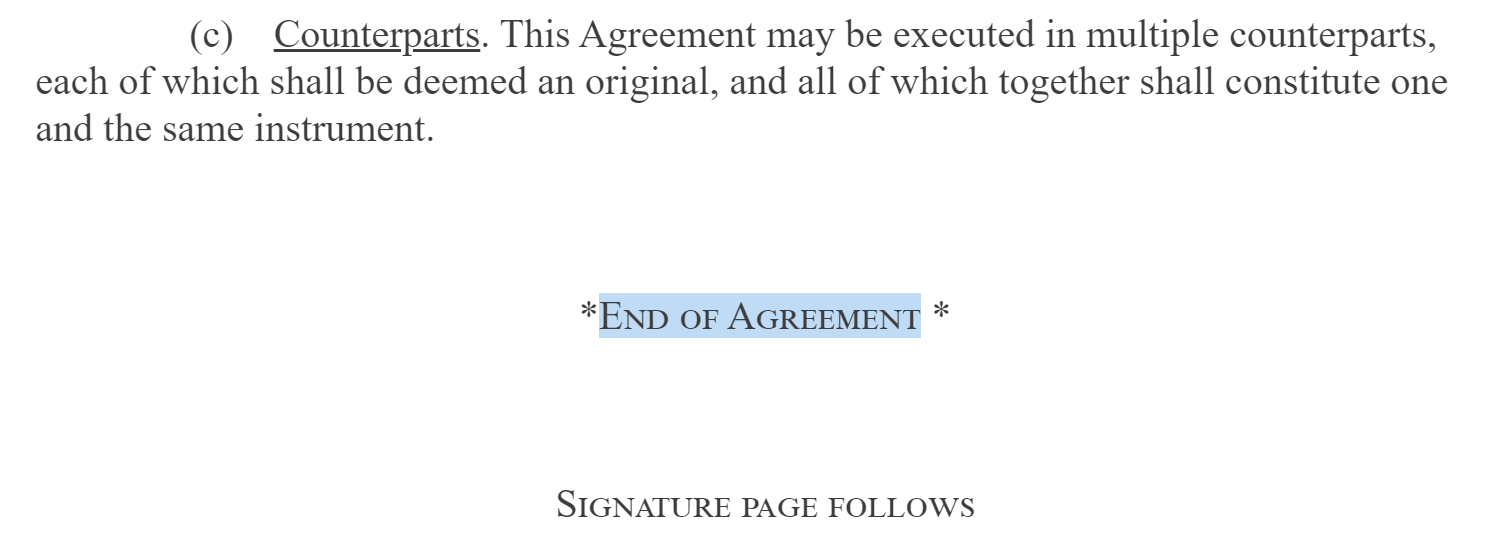
It occurs at the end of the body of the contract, sometimes with the notation Signature page follows or some variant:
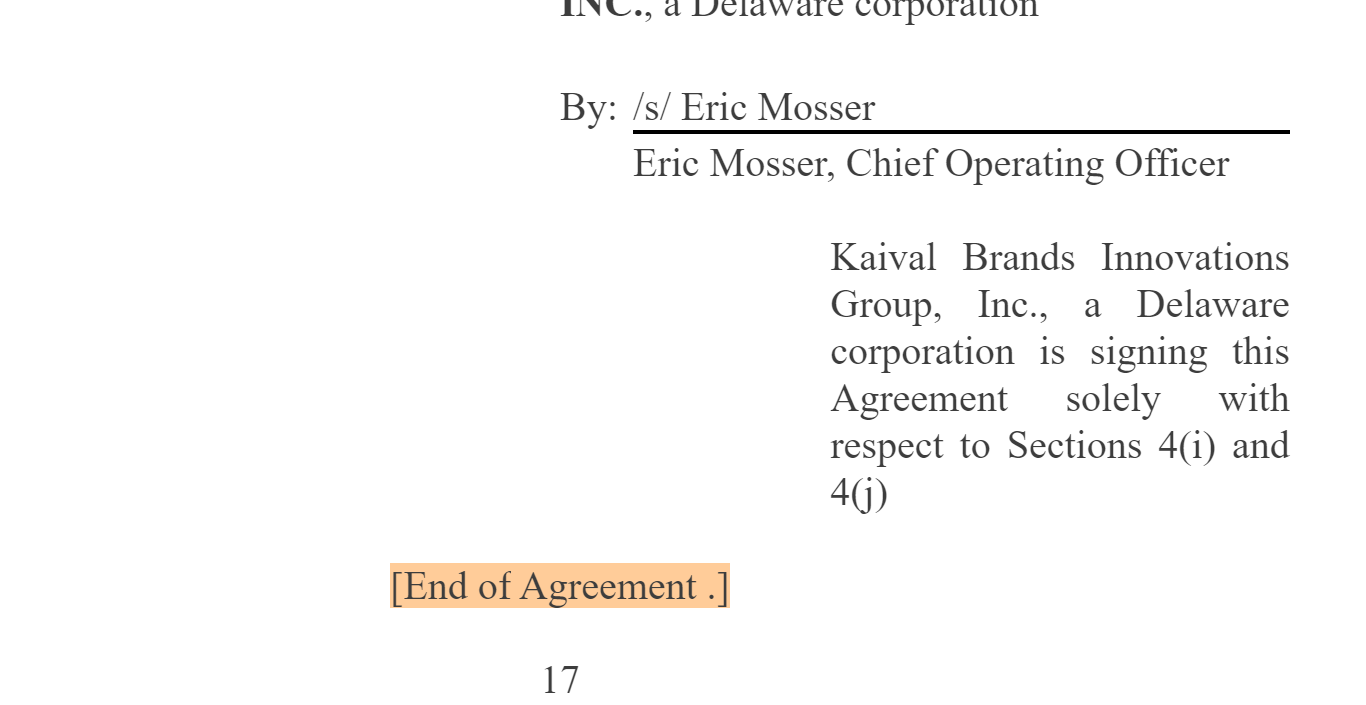
It occurs at the end of a contract without attachments (either after the signatures or, if the signatures are at the front, after the last provision):
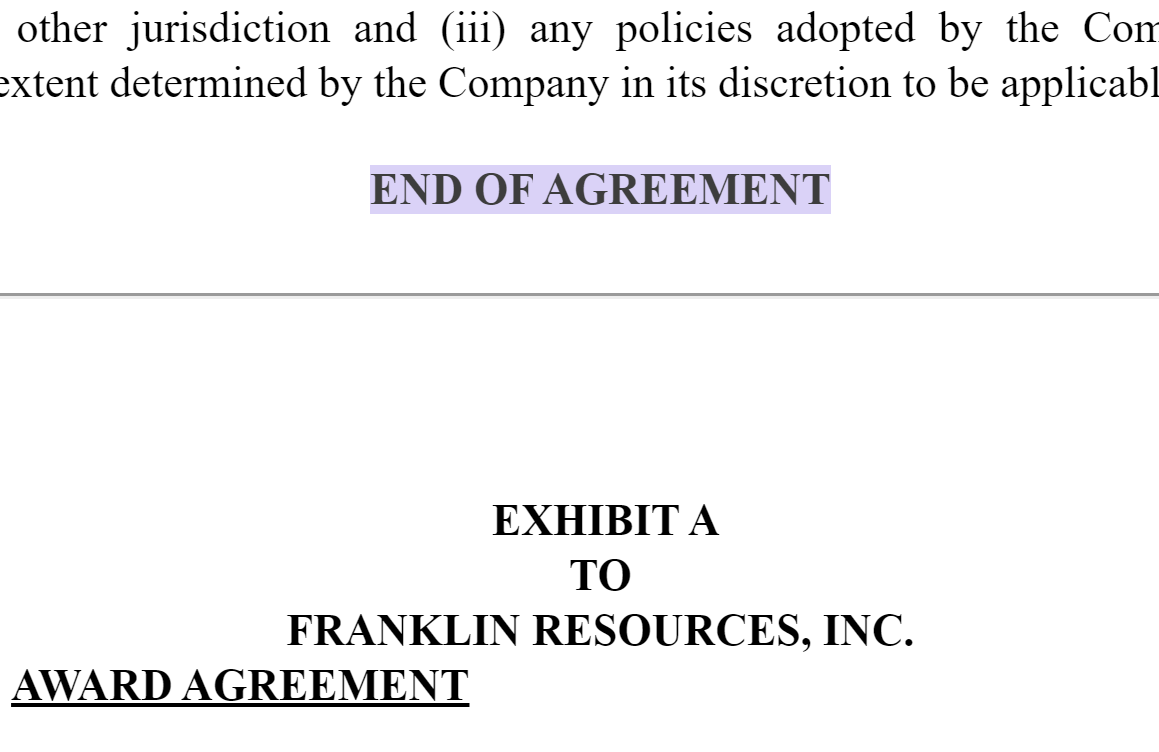
It occurs at the end of the contract but before the first attachment:
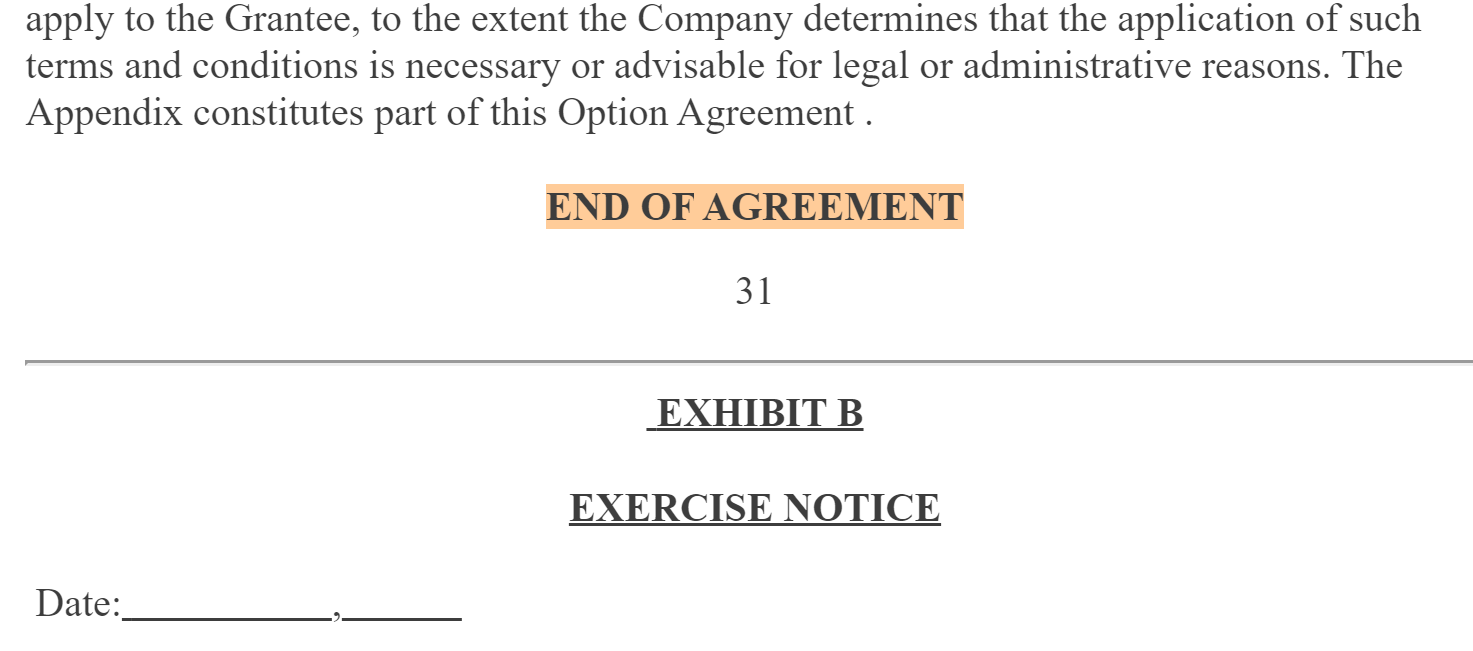
It occurs at the end of an attachment, but not the final attachment:
It occurs after the final attachment:
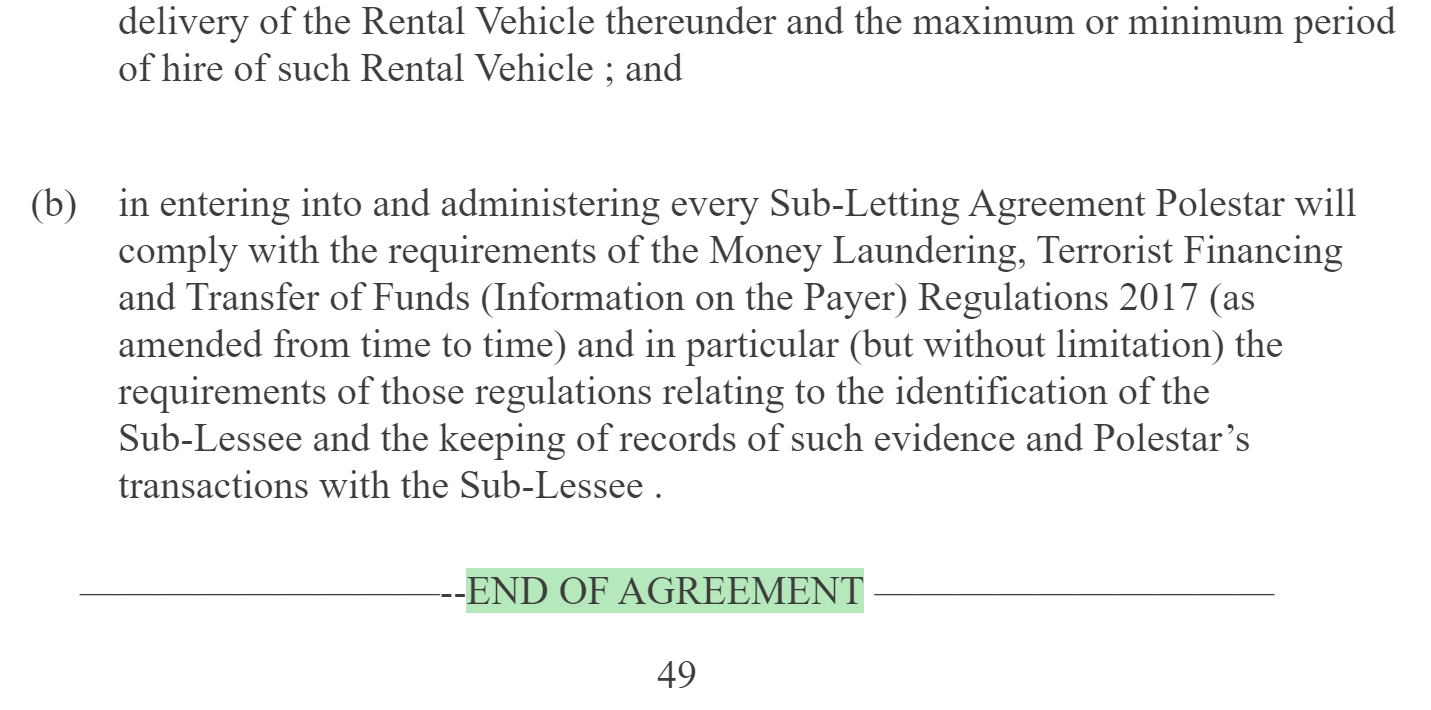
So what to make of End of Agreement? First, let’s consider the different contexts:
- Putting it at the end of the body of the contract and before the signatures is pointless. If you think readers would be confused by an expanse of blank space on the page before the signatures, use just Signature page follows.
- Putting it at the end of a contract without attachments would tell the reader that they’ve reached the end of the contract. That would be unnecessary if the signatures are at the end of the contract, as readers would understand that the signatures signal the end of the contract, but it might have some utility if the signatures are at the front of the contract. It would also tell the reader that there are no attachments, except it could be understood as meaning that the reader has reached the end of the main part of the contract (see option 3).
- Putting it at the end of the main part of a contract in a contract with attachments would tell the reader that they’ve reached the end of the main part of the contract. But if the reader has access to a file or a print copy with the attachments, that would be unnecessary. If the reader doesn’t have access to the attachments, it could be misleading, as the reader might understand the notation as meaning that there are no attachments.
- Putting it at the end of an attachment that isn’t the last attachment would tell the reader only that they’ve reached the end of that attachment. It seems odd to single out an individual attachment in that way.
- Putting it at the end of the last attachment (either at the bottom of the last page of the last attachment or by itself on the next page) would tell the reader that they’ve reached the end of all attachments. But that wouldn’t help the reader who is concerned about whether they have all the pages.
So option 2 and 5 would seem the least unlikely, but I don’t find them compelling enough.
Regarding option 2, I’d prefer having signatures at the end to signal the end of the contract. Otherwise, you could use the page-numbering convention Page X of Y to reassure readers that they’ve reached the end of the contract.
Regarding option 5, the page-numbering convention Page X of Y is much more useful than End of Agreement, as it tells the reader not only when they’ve reached the end of the attachments but also whether any pages are missing.
So I say the heck with End of Agreement.
I tweeted about this. Here’s one of several amusing replies:
Only if the very first line says “Beginning of Agreement”
— MAdams (@murder_he_twote) August 16, 2022
And here’s a bonus! In my rooting around, I encountered the notation End of Article X placed at the end of each article:
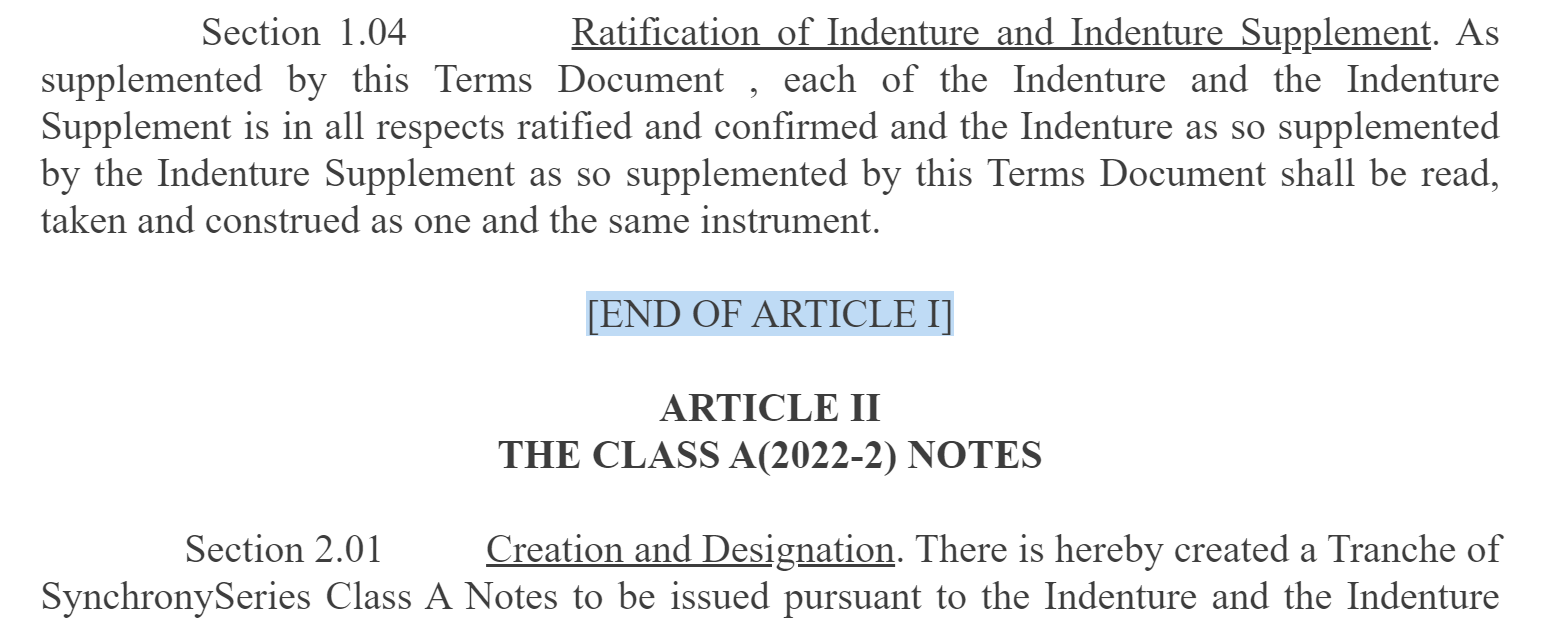
That’s pointless: having article 2 start is enough to tell you that you’ve reached the end of article 1. Here’s a tweet in response to the notion of using End of Article X:
I am ready for [End of sentence].
— Poutinho (@rhh) August 16, 2022
The broader message of this post is that it appears I’ll keep discovering new stuff.
Oh, and the manuscript of the fifth edition? It’s not going to the compositor until the day after tomorrow, so I have time to add a section on End of Agreement. I’m counting on the drafting gods to lay off now!