
Sometimes I come up with my analysis of a given word or phrase in one take. That’s the case with, for example, coupled with an interest; see this 2006 blog post.
But in the case of words and phrases that have more going on, my analysis might take a wandering path. For an extreme example of that, consider my analysis of the ambiguity of the word material:
- In my 2004 law review article A Legal-Usage Analysis of “Material Adverse Change” Provisions, I say on page 23 that material isn’t ambiguous.
- In my 2007 article Revisiting Materiality, published in the New York Law Journal, I briefly discuss the ambiguity of material.
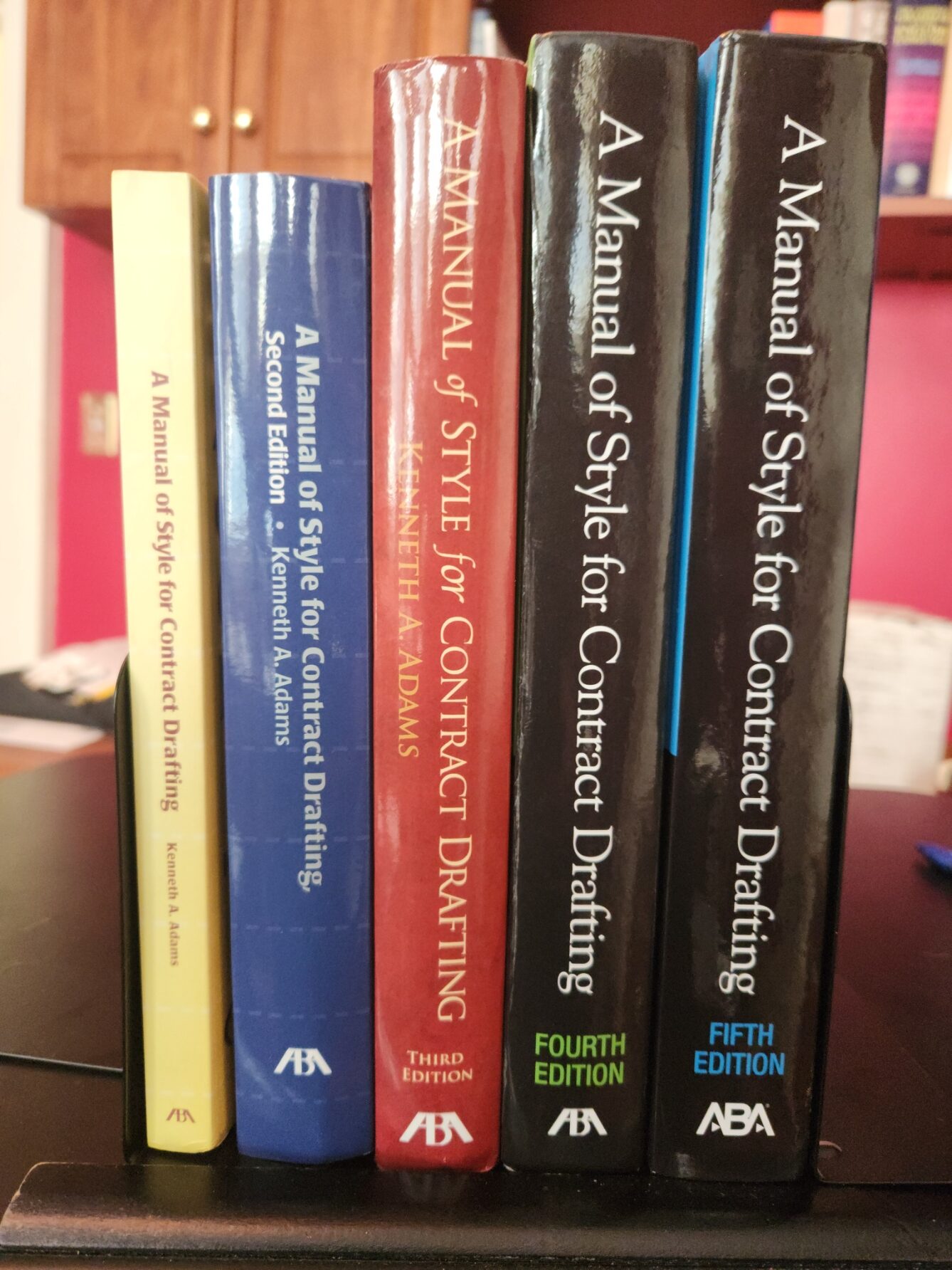
- That analysis made its way into the second edition of A Manual of Style for Contract Drafting, which came out in 2008. In due course, it appeared, with modest changes, in the third edition (2013) and the fourth edition (2017).
- Prompted by the 2018 Akorn opinion of the Delaware Court of Chancery, in which Vice Chancellor Laster distinguished in all material respects from material adverse effect, I finally got around to giving the subject the treatment it deserves. My law review article The Word Material Is Ambiguous in Contracts, Why That’s a Problem, and How to Fix It came out in 2023.
- That analysis made its way into the fifth edition of MSCD, which came out in 2023.
So I was utterly wrong in my 2004 law review article. That bad take was, and still is, consistent with the conventional wisdom, so no one noticed.
In my long interim phase, I poked gingerly at the subject. What caused the breakthrough was the court in Akorn in effect acknowledging that material is ambiguous. That gave me more to work with, and it served as a kick up the backside.
Here’s what I derive from this saga: Insight often comes in unexpected leaps. (Punctuated equilibrium, but over a few years as opposed to millions of years!) Even if all relevant evidence is available, making connections requires imagination, and imagination can’t be turned on like water from a faucet. Because I took advantage of imagination when it struck, I was able, finally, to come up with an analysis that I’m confident is both novel and authoritative.
This sort of progress explains the difference between the puny first edition of MSCD and the beast that is the fifth edition. I already know that the sixth edition will be yet another significant upgrade. In some ways, it’s a little pathetic that I’m still working on the same stuff 20+ years on, but that persistence is what makes MSCD invaluable, for those who care.
For the sixth edition I might revisit old chestnuts like coupled with an interest. Who knows where imagination might strike!